
59
Bartolomeo Schedoni (Modena, 1578 - Parma, 1615)
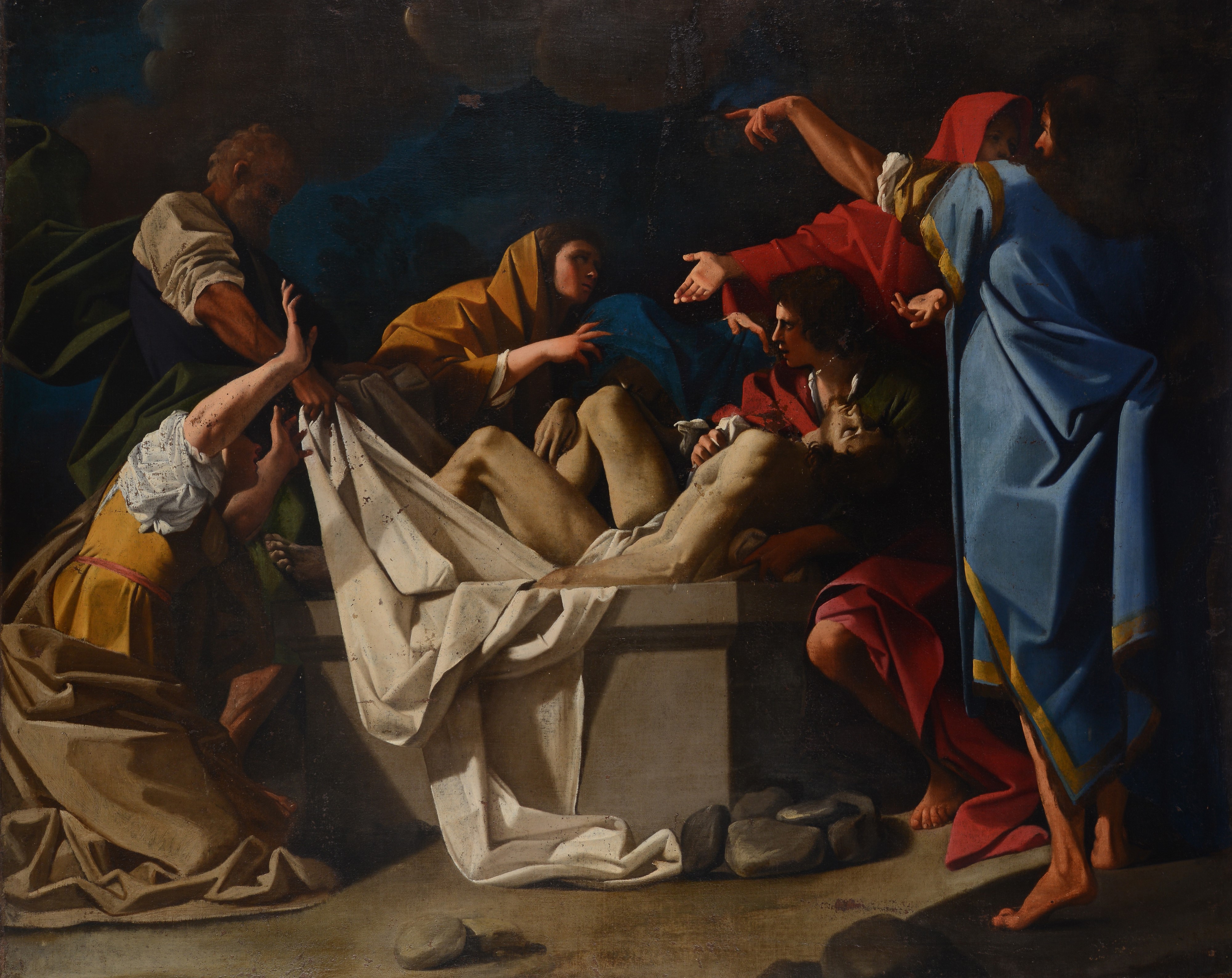
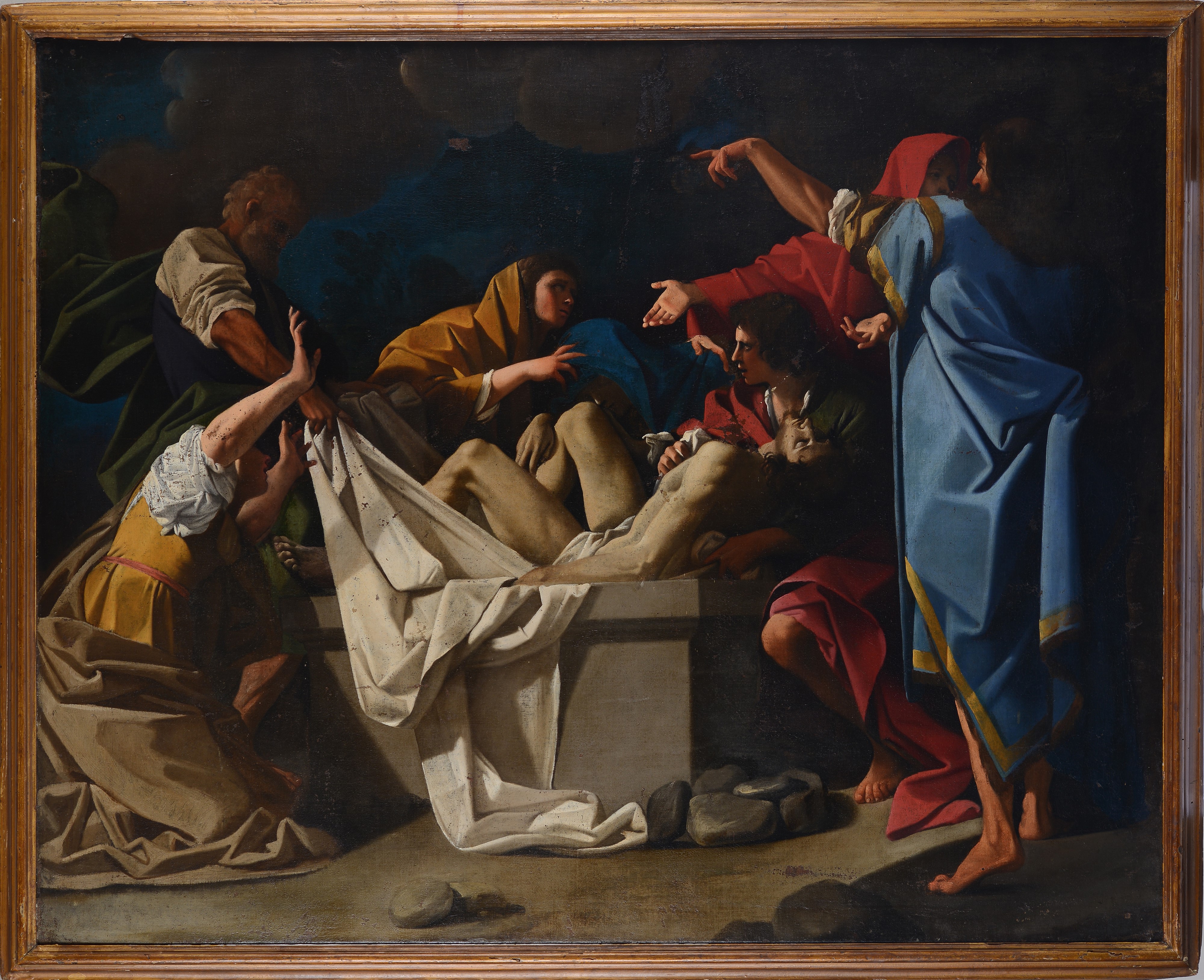
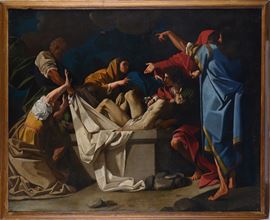
Deposition of Christ in the tomb
Oil on canvas
cm. 114x134
Expertise by Dr. Federica Dallasta dated November 28, 2017.
Autograph letter by C. Dwight Miller; appraisal by Carlo Mancosu; Zamboni & Melloni technical sheet.
"The work, coming from a private collection, could be the preparatory sketch for the work executed by 1614 by Bartolomeo Schedoni (1578-1615) for the Capuchin convent of Fontevivo (Parma), today preserved in the National Gallery of Parma alongside the other painting that was a pendant to this one: The Maries at the Sepulchre.
Expertise by Dr. Federica Dallasta
Autograph letter by C. Dwight Miller; appraisal by Carlo Mancosu; Zamboni & Melloni technical sheet.
"The work, coming from a private collection, could be the preparatory sketch for the work executed by 1614 by Bartolomeo Schedoni (1578-1615) for the Capuchin convent of Fontevivo (Parma), today preserved in the National Gallery of Parma alongside the other painting that was a pendant to this one: The Maries at the Sepulchre.
The painting in question was purchased by the current owners in 1985 from a private collection in Parma [...].
The following year, in May 1986, a photograph of it was submitted to Bartolomeo Schedoni's leading expert, American university professor C. Dwight Miller, who expressed a very favorable opinion of the work's quality, but was reluctant to definitively attribute it to Schedoni, both because he had not had the opportunity to view the canvas firsthand and because its state of conservation precluded a definitive assessment. The scholar, however, recommended a restoration to the owners, which was carried out between 1987 and 1988 by the firm Zamboni and Melloni of Reggio Emilia. Carlo Mancosu subsequently prepared an appraisal and a technical report, which included the opinions of Lucia Fornari Schianchi and Daniele Benati, who had in the meantime been able to observe the restored work. They also praised the painting, but did not dare to pronounce in favor of its authenticity.
Looking at the canvas, my conclusions support the hypothesis of attributing it to the master from Moena, perhaps supported by his workshop, where his brothers and students worked.
The reasons that lead me to consider the work autographed are:
1) The frayed brushstrokes visible in various details of the work are typical of the painter. We see them, in this case, on the Magdalene's cloak, positioned in the lower left part of the painting; in Christ's white drapery, which falls from the edge of the tomb in the center of the work; in the fingers of the Magdalene's right hand; and in Nicodemus's cloak, particularly on his left shoulder. The shadows painted in the lower right corner, near Nicodemus's feet, are also created with a similar technique.
2) The dimensions of the canvas are exactly half the size of the final work created for Fontevivo (228x283). This consideration could support the hypothesis of a preparatory sketch.
3) There are numerous differences between the two paintings: the Magdalene's blond hair is missing from the sketch; Joseph of Arimathea's face is less clearly drawn, appears darker, and stands out less against the background; the clouds in the dark landscape are also less visible; the tufts of grass in front of and to the side of the tomb are missing; the colors in the work are less luminous, except in the red cloak of one of the pious women and in that of Nicodemus on the right; these differences would support the canvas's authenticity and its function as a preparatory sketch.
4) Close observation allows us to appreciate the beauty of some of the facial details: Christ's face is rendered in a naturalistic way, with minute definition of the beard hairs and a skillful interplay of shadows and lights; the face of Saint John the Evangelist is enhanced in its dramatic expression by a strong chiaroscuro contrast; the face of the woman in the red cloak is worthy of the Modena master, as is that of Nicodemus, which features reddish touches on the tip of the nose and on the cheeks.
5) As in the painting for Fontevivo, in this one too the difference between the earthy complexion of the dead (in Christ and, in fact, in the Mother, psychologically dead at the geometric centre of the canvas, wrapped in her dark blue cloak) and the living (all the other characters, who try to comfort the Mother and honour the body of Christ) has been maintained.
6) As in the painting for Fontevivo, there is a strong chiaroscuro contrast, learned by Schedoni from the example of Caravaggio and applied in the works of the last years of his career.
7) The anatomies are perfect, as are the draperies. A copyist would not have been able to achieve this result.
8) The whole is dynamic, the gestures are theatrical, the bodies are inserted in a rigorous succession of perspective planes: all elements that reaffirm the high quality of the work.
9) The Correggio-style sfumato is clearly visible and should be considered a hallmark of Schedoni, who worked for a long time as a copyist of the works of Antonio Allegri.
10) Numerous copies of Fontevivo's work are known, but none of them ever achieve results comparable to the painting in question."
Expertise by Dr. Federica Dallasta
€ 130.000,00 / 150.000,00
Estimate
Unsold