
212
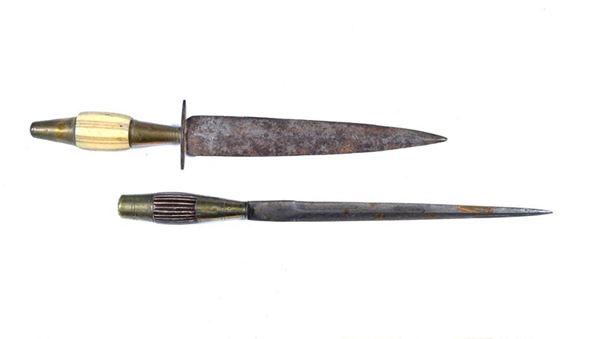
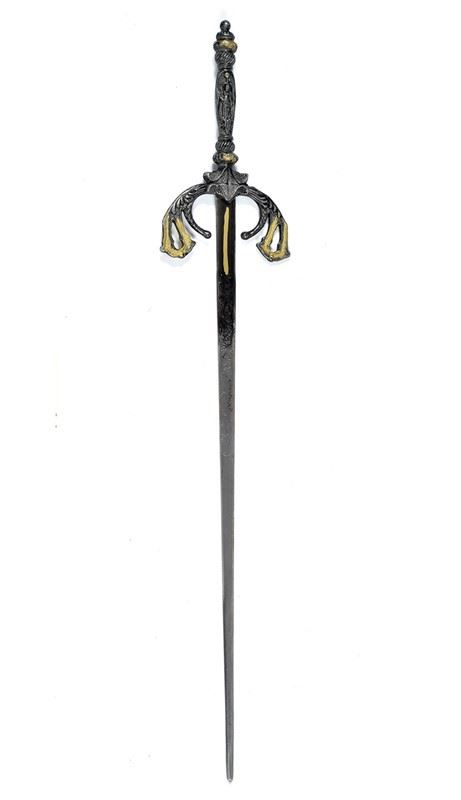
Two daggers of Granada
of Spanish origin, datable to the 19th century; both with two-edged blade and point, one of the two characteristic [..]
212
Two daggers of Granada
of Spanish origin, datable to the 19th century; both with two-edged blade and point, one of the two characteristic [..]
213
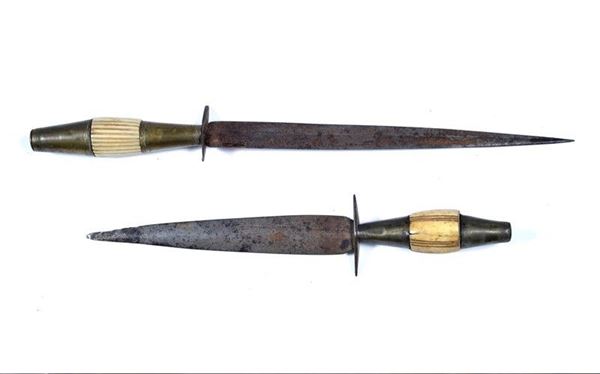
Two daggers of Granada
of Spanish origin, datable to the 19th century; both with two-edged blade and tip and handle with alternating [..]
213
Two daggers of Granada
of Spanish origin, datable to the 19th century; both with two-edged blade and tip and handle with alternating [..]
214
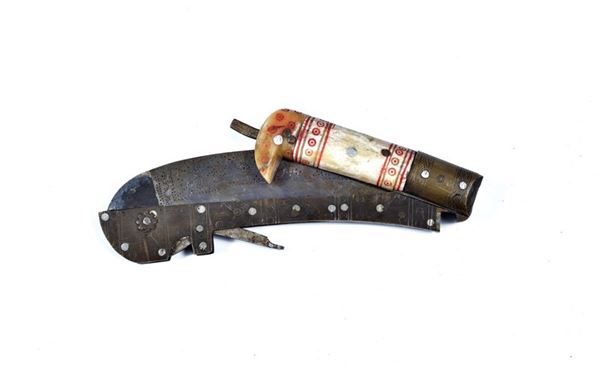
Lohar sickle knife
weapon once typical of the fearsome Bamochi tribes, residing at the famous Passo Kyber, datable to the early 20th [..]
214
Lohar sickle knife
weapon once typical of the fearsome Bamochi tribes, residing at the famous Passo Kyber, datable to the early 20th [..]
215
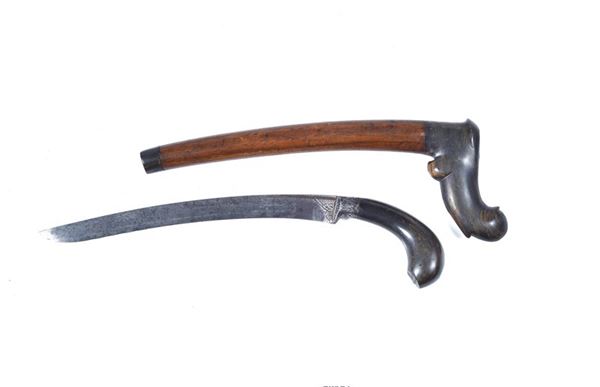
Sumatran Tumbok knife
datable to the end of the 19th century; sturdy single edged and pointed blade, carved in racemes in the heel area [..]
215
Sumatran Tumbok knife
datable to the end of the 19th century; sturdy single edged and pointed blade, carved in racemes in the heel area [..]
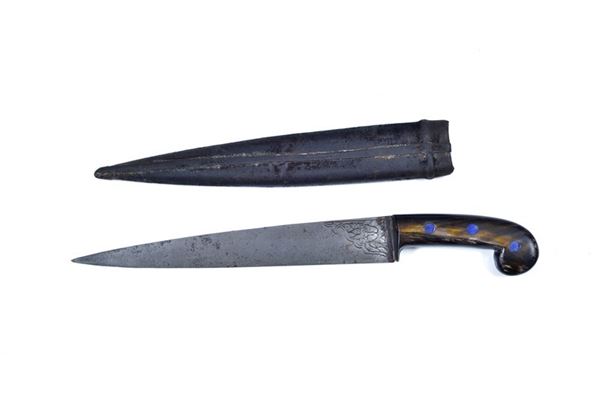
216
Knife from India
datable to the late 19th century; straight blade with flat faces with one edge and point, engraved at the heel [..]
216
Knife from India
datable to the late 19th century; straight blade with flat faces with one edge and point, engraved at the heel [..]
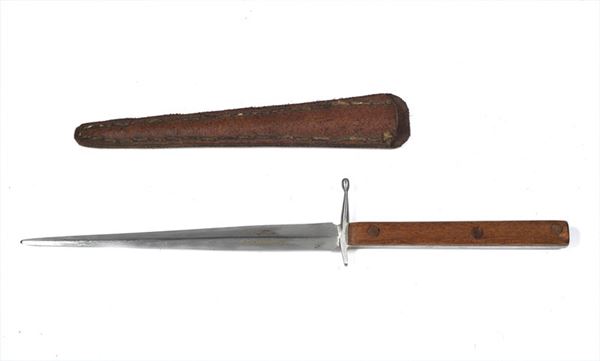
217
Combat dagger
double-edged blade ribbed in the center, straight guard with parade arm and thumb rest, riveted wooden grips, [..]
217
Combat dagger
double-edged blade ribbed in the center, straight guard with parade arm and thumb rest, riveted wooden grips, [..]
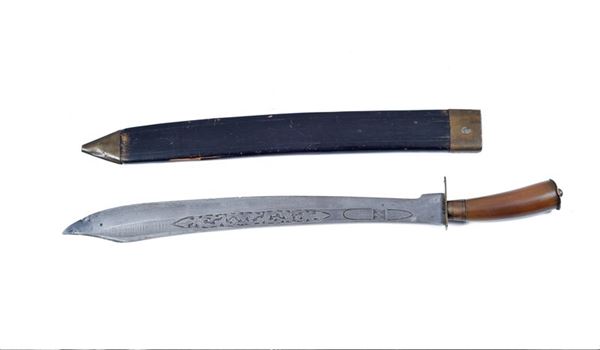
218
Coltellaccio
from Sumatra, datable to the early 20th century: strong curved single-edged blade with raised tip, modeled in [..]
218
Coltellaccio
from Sumatra, datable to the early 20th century: strong curved single-edged blade with raised tip, modeled in [..]
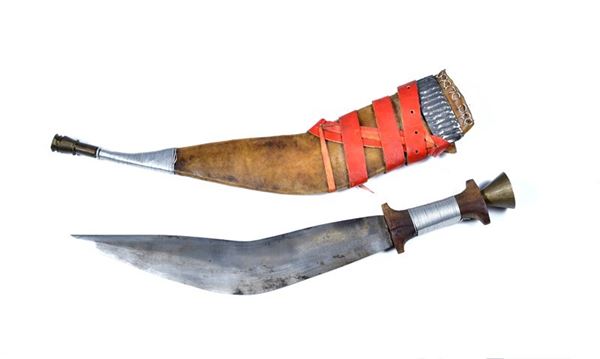
219
Great Danakil knife
typical of the Afar populations of Eritrea: two-edged blade and point; wooden handle with aluminum wire sleeve [..]
219
Great Danakil knife
typical of the Afar populations of Eritrea: two-edged blade and point; wooden handle with aluminum wire sleeve [..]
221
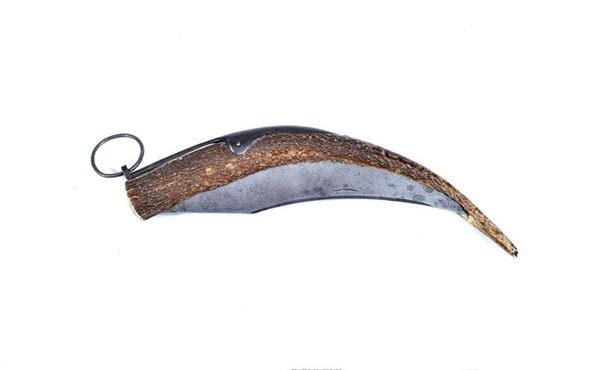
Pyrenean Navaja
of French production, datable to the late 19th century; single-edged blade and raised toe with very long false [..]
221
Pyrenean Navaja
of French production, datable to the late 19th century; single-edged blade and raised toe with very long false [..]
222
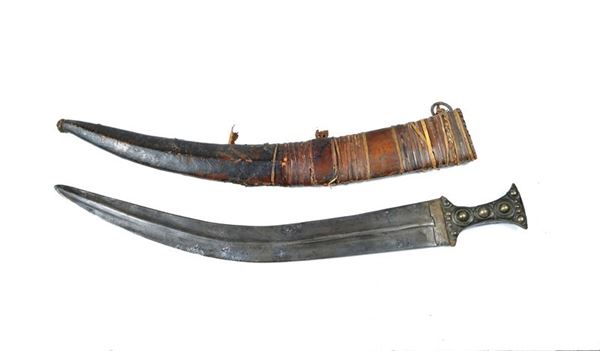
Great knife
coming from the Arabian Peninsula, datable to the 19th century; curved blade with two edges and point, accentuatedly [..]
222
Great knife
coming from the Arabian Peninsula, datable to the 19th century; curved blade with two edges and point, accentuatedly [..]
223
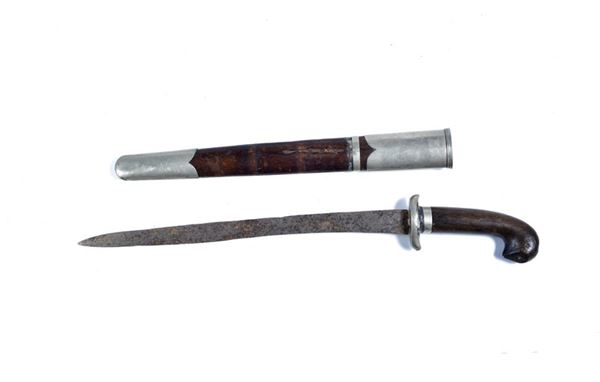
Sumatran Goluk knife
datable to the 19th century: straight blade with two edges, in damask with partially still visible "pamor"; anthropomorphic [..]
223
Sumatran Goluk knife
datable to the 19th century: straight blade with two edges, in damask with partially still visible "pamor"; anthropomorphic [..]
224
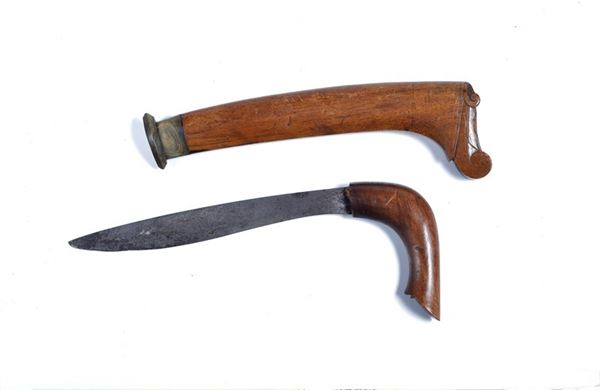
Sumatran Badek Knife
datable to the 19th century; single-edged and pointed blade, in damask with "pamor" still discreetly visible; [..]
224
Sumatran Badek Knife
datable to the 19th century; single-edged and pointed blade, in damask with "pamor" still discreetly visible; [..]
225
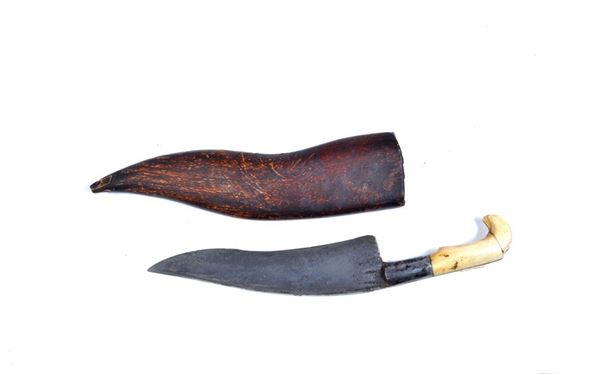
Kerala Indian knife
datable to the 19th century; sinuous and very strong single-edged blade and tip with T-shaped back, anatomical [..]
225
Kerala Indian knife
datable to the 19th century; sinuous and very strong single-edged blade and tip with T-shaped back, anatomical [..]
226
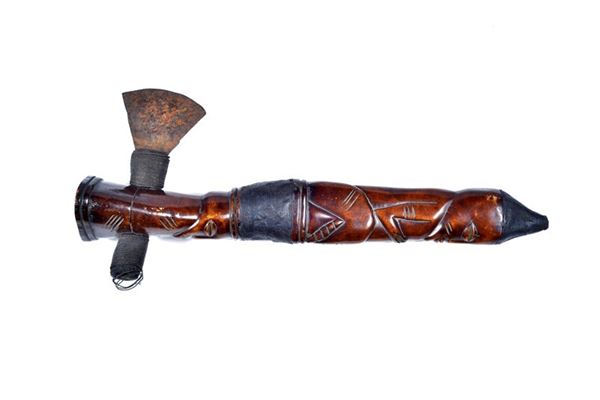
Ceremonial ax-scepter
coming from Cameroon, probably of Bamum area, datable to the first half of the 20th century: handle composed of [..]
226
Ceremonial ax-scepter
coming from Cameroon, probably of Bamum area, datable to the first half of the 20th century: handle composed of [..]
227
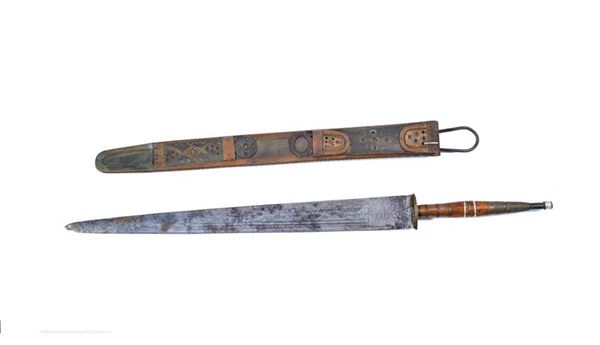
Telek knife of the Tuareg
datable to about 1930: straight blade with two edges and point, adorned with thin shells and geometric engravings; [..]
227
Telek knife of the Tuareg
datable to about 1930: straight blade with two edges and point, adorned with thin shells and geometric engravings; [..]
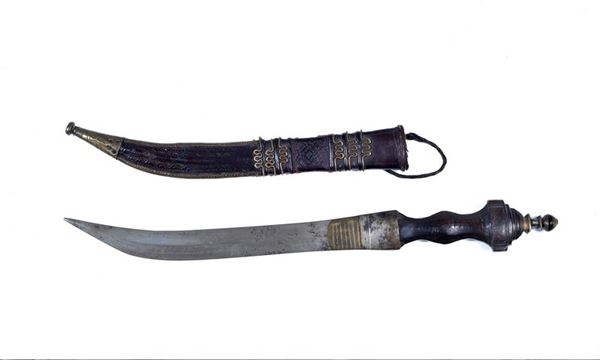
228
Knife from Senegal
probably from the Mandingo area, datable to the early 20th century: curved blade with two edges and tip with brass [..]
228
Knife from Senegal
probably from the Mandingo area, datable to the early 20th century: curved blade with two edges and tip with brass [..]
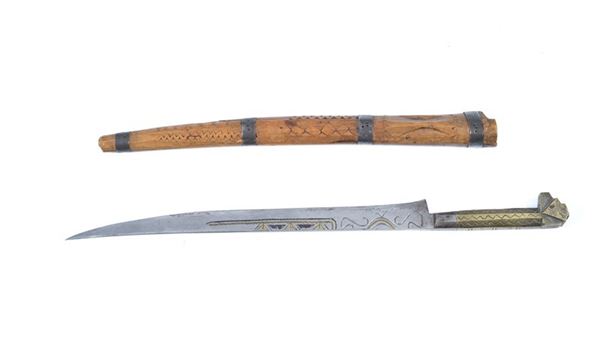
229
Flissa knife
typical knife of the Berber populations of Algeria: thin but sturdy single-edged blade and point, adorned with [..]
229
Flissa knife
typical knife of the Berber populations of Algeria: thin but sturdy single-edged blade and point, adorned with [..]
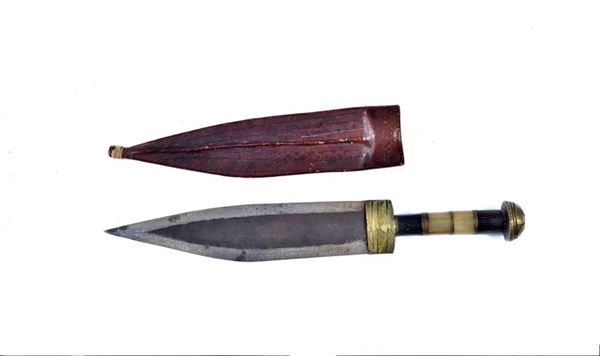
230
Billao
typical Somalian knife, datable to about 1930: two-edged blade and point, handle with brass guard and button, [..]
230
Billao
typical Somalian knife, datable to about 1930: two-edged blade and point, handle with brass guard and button, [..]
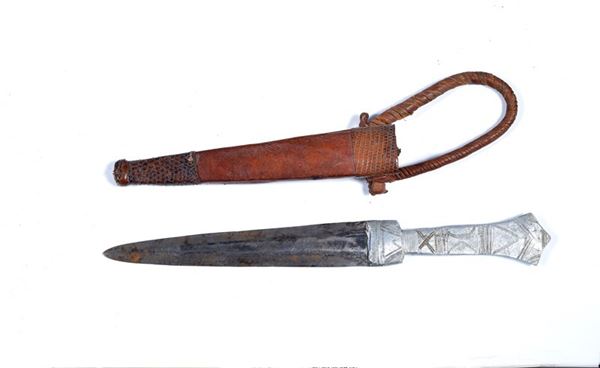
231
Knife from the Horn of Africa
coming from Sudan or Somalia, datable to about 1930: straight blade with two edges and point, cast aluminum handle, [..]
231
Knife from the Horn of Africa
coming from Sudan or Somalia, datable to about 1930: straight blade with two edges and point, cast aluminum handle, [..]
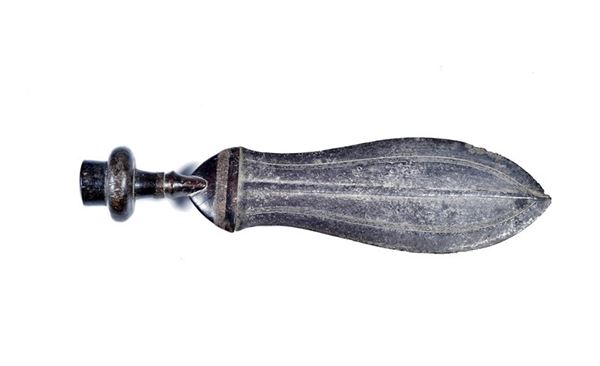
232
"Peace" ritual knife
ceremonial knife typical of the Kuba populations of Congo, datable to the late 19th century: two-edged blade, [..]
232
"Peace" ritual knife
ceremonial knife typical of the Kuba populations of Congo, datable to the late 19th century: two-edged blade, [..]
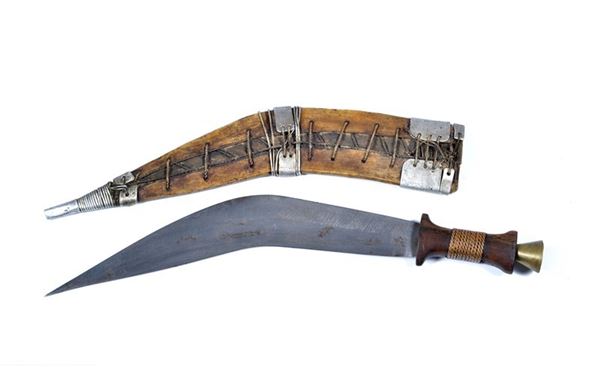
233
Great Danakil knife
typical of the Afar populations of Eritrea: curved blade with two edges and point; wooden handle with copper braid [..]
233
Great Danakil knife
typical of the Afar populations of Eritrea: curved blade with two edges and point; wooden handle with copper braid [..]
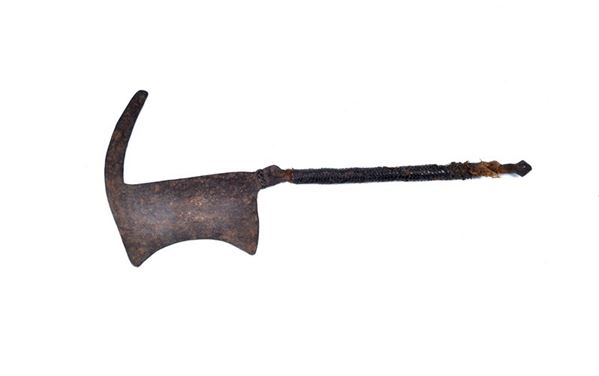
234
Throwing knife
from Cameroon, datable to the beginning of the 20th century: made of iron worked, as per tradition, by cold beating; [..]
234
Throwing knife
from Cameroon, datable to the beginning of the 20th century: made of iron worked, as per tradition, by cold beating; [..]
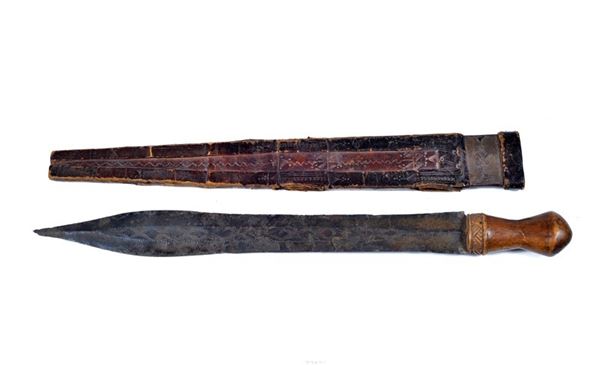
235
Great knife
coming from sub-Saharan West Africa, probably from Mauritania, datable to the early 20th century: two-edged blade, [..]
235
Great knife
coming from sub-Saharan West Africa, probably from Mauritania, datable to the early 20th century: two-edged blade, [..]
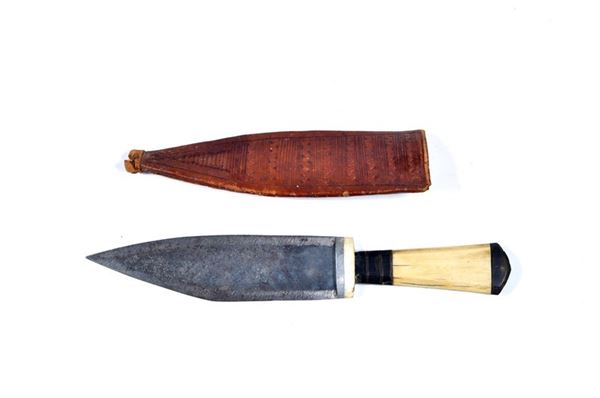
236
Billao
typical knife of Somalia, datable to about 1930: blade with two edges and point, handle sectors of alternating [..]
236
Billao
typical knife of Somalia, datable to about 1930: blade with two edges and point, handle sectors of alternating [..]
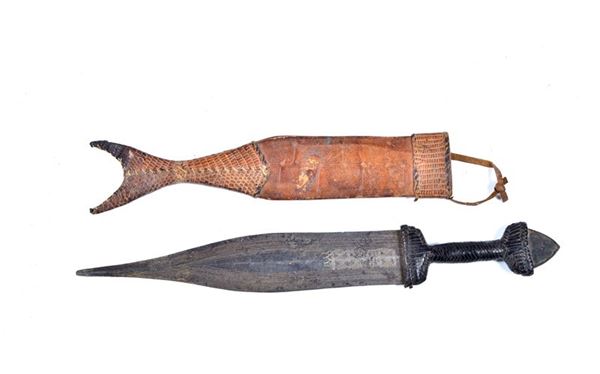
237
Knife from Niger
two-edged and pointed blade, traditionally worked by beating, adorned with thin shells and geometrizing engravings; [..]
237
Knife from Niger
two-edged and pointed blade, traditionally worked by beating, adorned with thin shells and geometrizing engravings; [..]
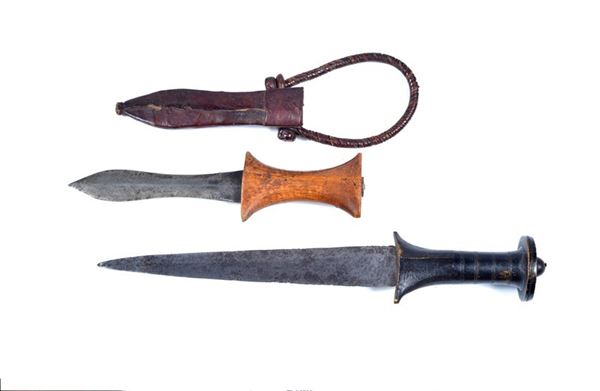
238
Lot of two Sudanese knives
datable to the late 19th century: classic arm knife with sturdy two-edged blade well worked by beating, wooden [..]
238
Lot of two Sudanese knives
datable to the late 19th century: classic arm knife with sturdy two-edged blade well worked by beating, wooden [..]
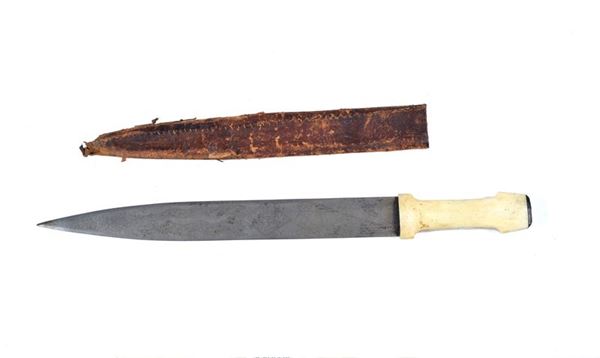
239
Knife from Sudan
straight two-edged blade with flat faces, adorned with etching motifs of pseudo Koranic inscriptions, typical [..]
239
Knife from Sudan
straight two-edged blade with flat faces, adorned with etching motifs of pseudo Koranic inscriptions, typical [..]
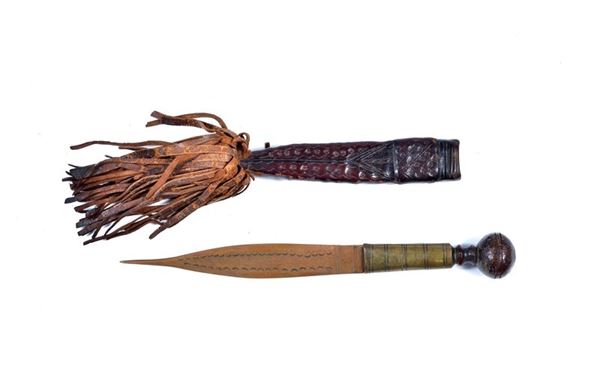
240
Mandingo ceremonial knife
copper blade, adorned with lunette engravings; brass handle with turned wooden knob; brown leather sheath, decorated [..]
240
Mandingo ceremonial knife
copper blade, adorned with lunette engravings; brass handle with turned wooden knob; brown leather sheath, decorated [..]
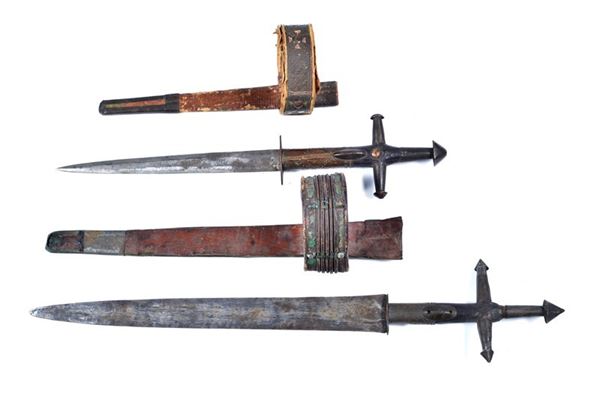
241
Two Telek Tuareg knives
datable to about 1930: both with straight two-wire blades, wooden handles with brass fittings and classic cruciform [..]
241
Two Telek Tuareg knives
datable to about 1930: both with straight two-wire blades, wooden handles with brass fittings and classic cruciform [..]